The future of sustainable architecture may depend less on how buildings begin and more on how they evolve — and that is where adaptive architecture makes the difference.
Imagine a building that is beautifully designed.
It responds to the climate. Its materials are carefully selected. Natural light enters thoughtfully. Every space serves a purpose.
On the day of its completion, it represents everything the architect intended.
But what happens twenty years later?
The family living there has changed. The way people work has changed. Technology has evolved. Some rooms are no longer needed, while others must serve entirely new purposes.
Suddenly, a building that once worked perfectly begins to feel limiting.
Walls are demolished. Interiors are replaced. Services are relocated. Materials that still have years of useful life are discarded.
And a question emerges.
If a building was designed sustainably, why does adapting it require so much waste?
Perhaps the answer lies in something architecture doesn’t discuss often enough.
The ability to change.
A Building Is Never Truly Finished

In architecture, completion is treated as a milestone.
The construction is finished. The interiors are installed. The building is photographed. The project enters a portfolio.
But for the people who occupy it, that is only the beginning.
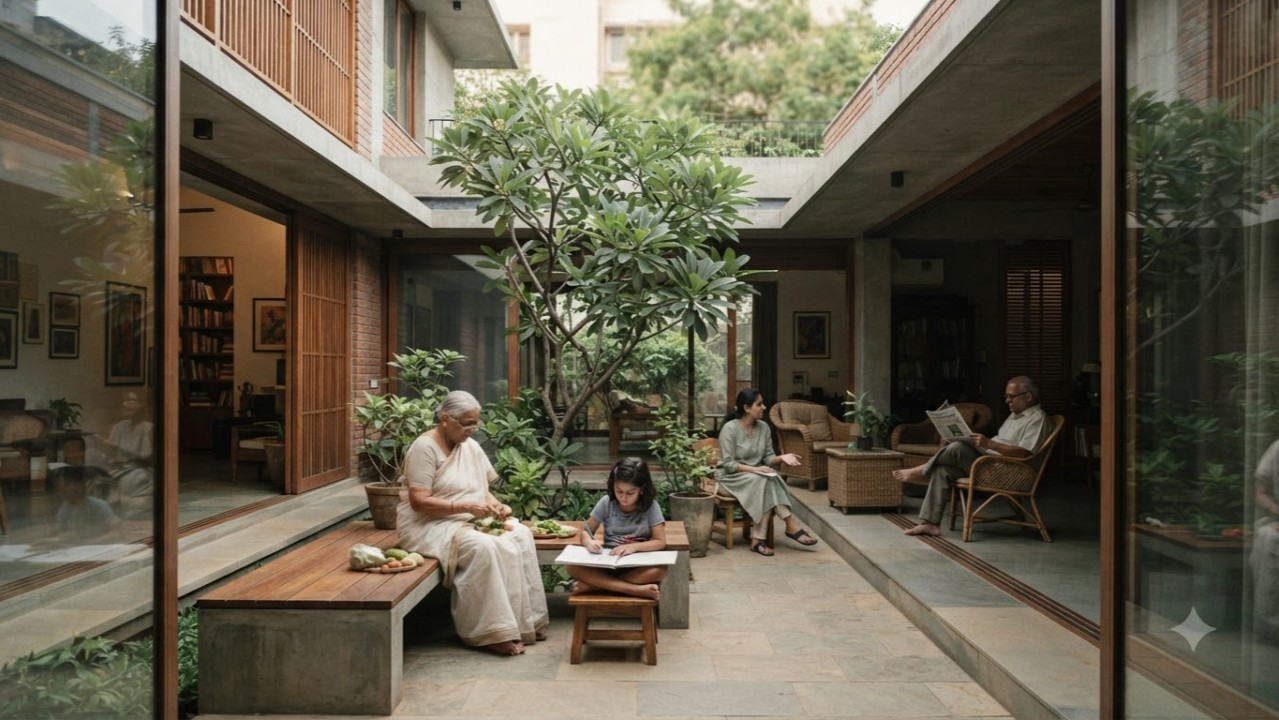
A home may need to accommodate ageing parents.
An office may transition to a hybrid working environment.
A commercial space may need to support an entirely different business.
Even something as simple as a child’s bedroom eventually becoming a workspace represents a change in how architecture is experienced.
These transformations are not failures of the original design.
They are part of life.
Yet we often design buildings as though the needs of their occupants will remain unchanged.
What if adaptability were considered an essential architectural quality rather than a problem to solve later?
Sustainability Is Also About What We Don’t Have to Replace

When discussing sustainable architecture, attention naturally turns to energy efficiency, material selection, and environmental performance.
These are important considerations.
But there is another dimension worth examining: how long the building and its components remain useful.
Consider two interior spaces.
One is designed around highly specific built-in elements, fixed layouts, and finishes that are difficult to repair or replace independently.
The other allows for rearrangement, accessible services, repairable finishes, and components that can be adapted without disturbing the entire space.
Both may look equally beautiful when completed.
But when the requirements change, their environmental consequences can be very different.
A design that accommodates change may avoid unnecessary demolition, replacement, and reconstruction.
Of course, flexibility is not always free. Some adaptable systems require additional materials, cost, or complexity upfront.
That is precisely why architects must evaluate the trade-offs.
The goal is not maximum flexibility everywhere. It is intelligent flexibility where future change is reasonably likely.
The Most Important Design Decisions May Be Invisible

A building’s adaptability rarely appears in its most impressive photograph.
It exists in the decisions behind the architecture.
How structural elements are positioned.
Whether interior partitions can be modified.
How easily mechanical and electrical systems can be accessed.
Whether components can be repaired without damaging surrounding materials.
Whether a space can accommodate a different function without extensive reconstruction.
These decisions may begin in the earliest planning discussions, but they must continue through detailed drawings, BIM coordination, interior design, and construction.
A beautiful concept that cannot accommodate realistic future needs may create limitations that only become visible years later.
This is where architectural intelligence must extend beyond visual composition.
Because some of the most valuable features of a building are the ones its occupants may never consciously notice.
Until something needs to change.
The Responsibility of Designing for Someone We Haven’t Met

An architect usually designs for a known client.
We understand their requirements, budget, preferences, and expectations.
But if a building survives for several decades, it may eventually serve people the architect never meets.
Different families.
Different businesses.
Different generations.
Their expectations may be completely different from those of the original occupants.
We cannot predict every future requirement.
Nor should we pretend that a single design can accommodate everything.
But we can create buildings that are less resistant to reasonable change.
We can question whether every partition needs to be permanent.
We can consider whether materials can be maintained instead of replaced.
We can think about how future interventions might affect the original structure.
And we can ask whether today’s perfect solution creates tomorrow’s unnecessary demolition.
These questions change how we define architectural responsibility.
Design Beyond Aesthetics

At Aesthetic Designs, we believe architecture must be evaluated beyond what it looks like on the day of completion.
A building should respond to its environment.
It should serve the people who occupy it.
It should use resources responsibly.
But it should also acknowledge that the future will not look exactly like the present.
To us, Design Beyond Aesthetics means considering not only how a space looks and functions today, but how its design decisions may influence the people, resources, and possibilities of tomorrow.
This does not mean every building should become infinitely adaptable.
It means future change deserves a place in the design conversation.
Because perhaps the most responsible architecture isn’t the building that remains exactly as we designed it.
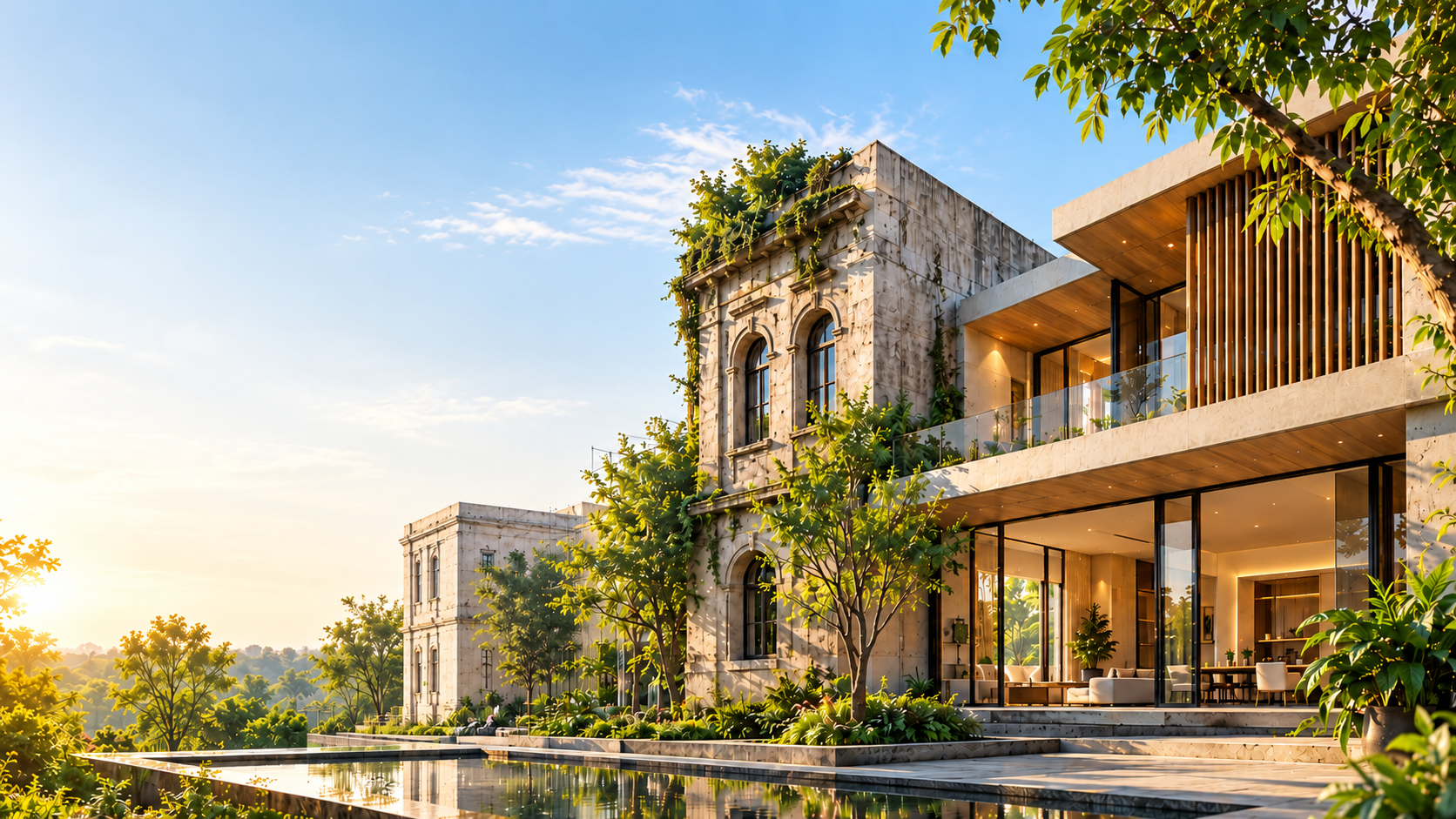
Perhaps it’s the building that can evolve without having to erase everything that came before.
And that leaves us with one question worth asking before the next project begins:
Are we designing a building for its first occupants, or for its entire life?
Designing for a Future We Cannot Predict
At Aesthetic Designs, we believe great architecture is not defined solely by how a building looks on the day of completion, but by how well it continues to serve the people who use it over time.
Through Design Beyond Aesthetics, we look beyond visual appeal to consider functionality, sustainability, material responsibility, and the potential for spaces to evolve with changing needs.
Because the future cannot be predicted, but thoughtful design can help us prepare for it.
Perhaps the true measure of sustainable architecture is not simply how efficiently a building performs today, but how gracefully it adapts to the demands of tomorrow.
The question is no longer just how long a building will last, but how well it will evolve.
What role should adaptability play in the future of architecture? Should designing for change become as important as designing for energy efficiency and material sustainability?
We’d love to hear your perspective.
Aesthetic Designs | Changing Perspective
#AestheticDesigns #AestheticGroup #AdaptiveArchitecture #SustainableArchitecture #FutureReadyDesign #ArchitecturalInnovation #DesignBeyondAesthetics #Sustainablearchitectureinmumbai #ArchitectureAndDesign