For years, “off-grid living” carried a certain image: isolation, hardship, a life stripped of comfort in exchange for independence. That image is outdated.
The real story of off-grid living isn’t about giving things up. It’s about engineering reliability into a home — designing systems for power, heat, water, and waste that you can trust every single day, without a utility company standing behind them.
As professionals in design, construction, and real estate, this shift matters. Off-grid isn’t a fringe lifestyle choice anymore — it’s a legitimate design challenge, and increasingly, a market segment.
The Four Systems That Actually Define Off-Grid Life
Strip away the myths, and every functional off-grid home rests on four pillars:
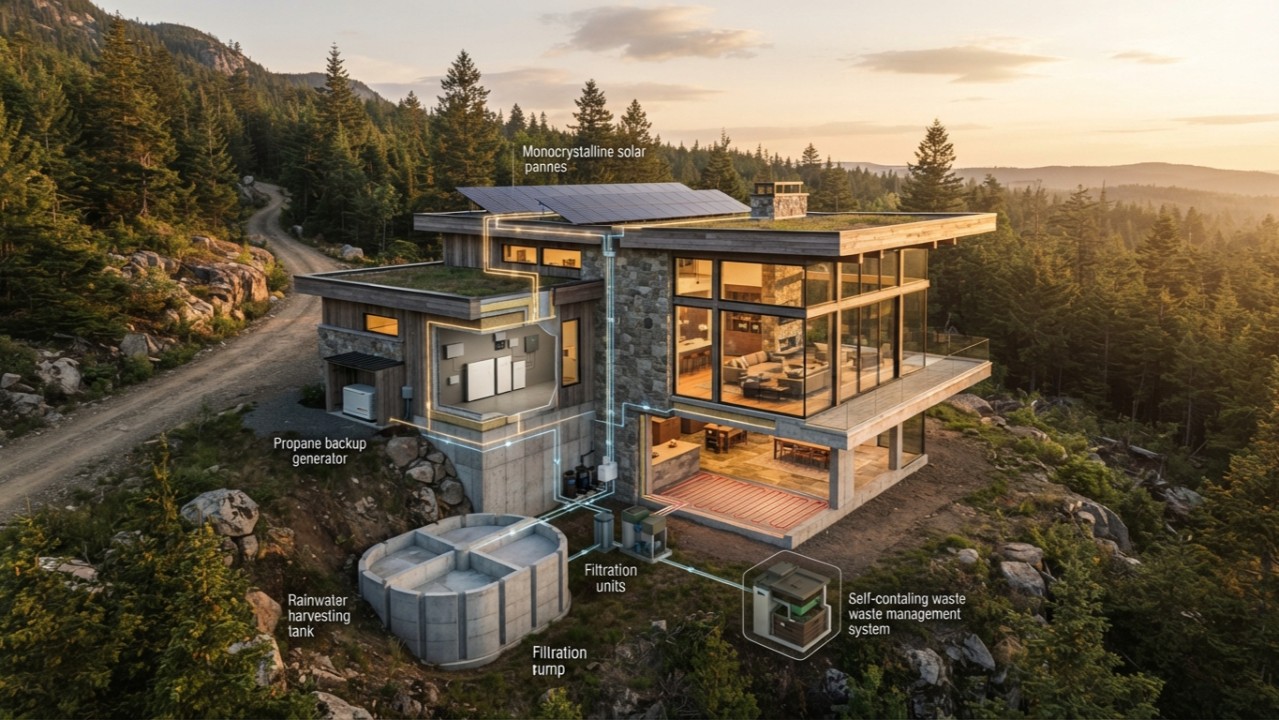
⚡ Power — Solar remains the go-to primary source, not because it’s the most powerful option, but because it’s consistent, quiet, and low-maintenance. The smartest setups aren’t solar-only; they’re hybrid — solar for daily loads, battery storage for flexibility, and a propane generator as backup when winter cuts daylight hours short.
🔥 Heat — Comfort in an off-grid home is decided here. Indoor propane heaters paired with strong insulation and good airflow planning are what separate a warm, liveable cabin from a stressful one. Heating isn’t a single appliance — it’s a system.
💧 Water & ♻️ Waste — The least glamorous systems, and the ones first-timers underestimate most. Composting toilets have shed their “novelty” reputation and become dependable lifestyle infrastructure. Reliable water filtration and simple wastewater handling quietly determine whether daily life feels manageable or exhausting.
Where First-Timers Go Wrong
A few patterns show up again and again in early off-grid builds:
- Treating it like camping. Temporary gear breaks down under daily, year-round use.
- Underestimating winter. Shorter daylight, frozen lines, and higher heating demand expose weak systems fast.
- Over-engineering. More complexity means more failure points — and off-grid living rewards setups you can troubleshoot yourself.
- Chasing novelty over proven tech. Trendy all-in-one products rarely outperform simple, field-tested systems.
- Ignoring water and waste until it’s a problem. Everyone plans power first; comfort often hinges on what’s planned last.
What Off-Grid Living Actually Requires
Not a checklist of gear — a foundation of dependable basics:
To feel comfortable: reliable heat, consistent light, hot food, clean water.
To feel confident: backup power, simple tools, and a working understanding of your own systems.
What you don’t need: over-automation, half-baked imitations of urban conveniences, or excess equipment that demands constant attention.
The Real Takeaway
The best off-grid setups aren’t the most impressive — they’re the most invisible. Power you don’t have to babysit. Heat that holds steady. Water and waste systems that stay clean without a fight.
Whether you’re designing a remote cabin, advising a client on sustainable builds, or exploring self-sufficient living yourself, the principle holds: off-grid living succeeds or fails on system design, not gear ownership.
What’s your experience with off-grid or self-sufficient home systems — solar, water harvesting, waste management? Curious to hear how others in the AEC and real estate space are approaching this.