In rapidly urbanizing cities like Mumbai, Delhi, and Bengaluru, the battle for space is constant. Roads are widened for vehicles, flyovers are constructed to ease congestion, and metro lines cut across the skyline. Yet, one essential layer of mobility continues to be neglected — the footpath.
Footpaths are not merely strips of concrete along the road. They are the most democratic urban spaces in any city. They serve the office worker, the street vendor, the elderly pedestrian, the child walking to school, and the differently-abled individual navigating daily life. In high-density urban environments, reclaiming and redesigning footpaths is not an aesthetic upgrade — it is an urban necessity.
The Crisis of Pedestrian Infrastructure

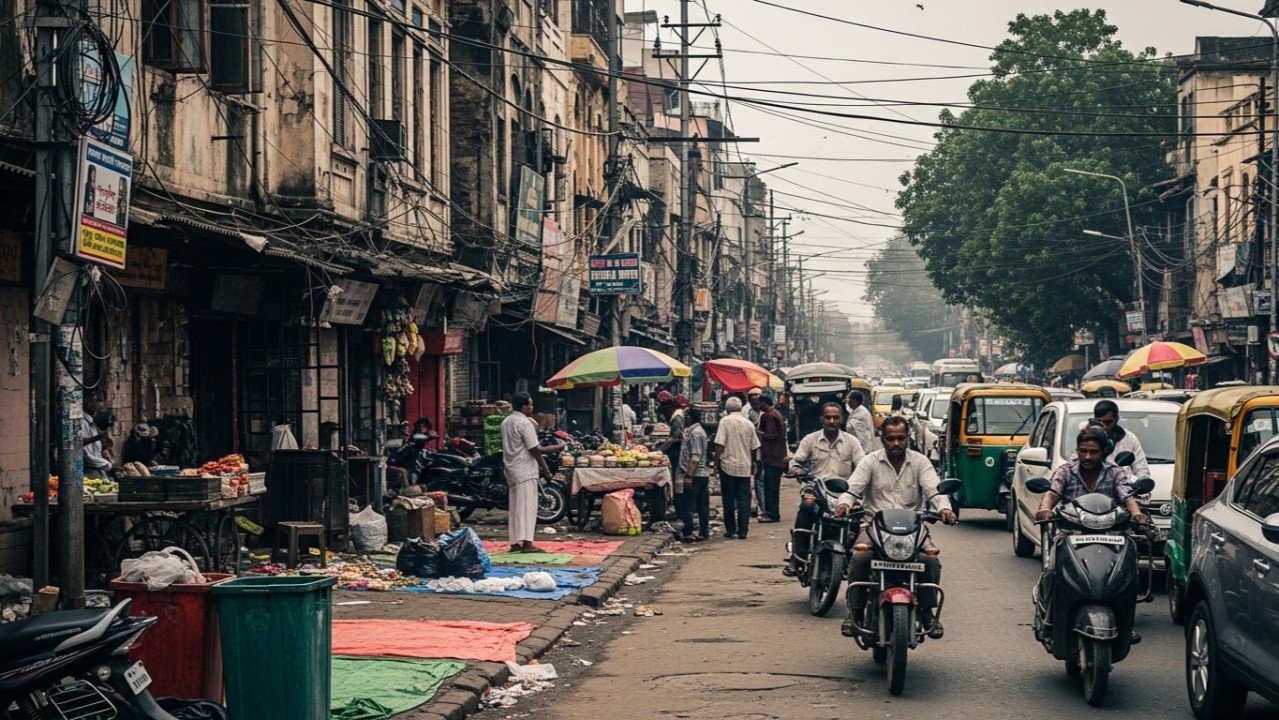
High-density cities face intense spatial pressure. Informal vending, parked vehicles, utility boxes, uneven paving, and poor drainage often render footpaths unusable. As a result, pedestrians are pushed onto the carriageway, increasing the risk of accidents and reducing overall traffic efficiency.
Ironically, despite investments in large-scale infrastructure, pedestrian safety remains a critical concern. The absence of continuous, obstruction-free walkways disrupts mobility networks and diminishes urban quality of life.
A city that neglects its pedestrians ultimately weakens its mobility system.
Footpaths as Mobility Corridors

Professional urban planning today views footpaths as mobility corridors, not leftover margins. They are essential components of integrated transport systems, linking homes to public transit, commercial districts, and public amenities.
Cities like Copenhagen and Singapore demonstrate how prioritizing pedestrians enhances overall efficiency. Wide, shaded, universally accessible sidewalks encourage walking, reduce vehicular dependency, and promote public health.
A well-designed footpath should include:
- Adequate width based on pedestrian volume
- Barrier-free access (ramps, tactile paving)
- Street lighting for safety
- Shading elements or tree cover
- Organized vending zones
- Proper drainage and durable materials
When designed strategically, footpaths increase economic activity and strengthen social interaction.
The Social Dimension of Streets

Footpaths are more than transit routes — they are social infrastructure. In dense cities, where private open space is limited, streets become extensions of everyday life. Informal conversations, small businesses, waiting areas, and spontaneous interactions unfold along these edges.
Urban theorists like Jane Jacobs emphasized the importance of “eyes on the street,” highlighting how active sidewalks enhance safety and community engagement. A lively pedestrian realm fosters inclusivity and belonging.
Thus, redesigning footpaths is not only about movement — it is about restoring urban vitality.
Accessibility and Inclusivity

An inclusive city begins at ground level. Universal design principles must guide footpath development. This includes tactile indicators for the visually impaired, gentle slopes for wheelchair users, non-slip surfaces, and seamless transitions at intersections.
Accessibility is not an optional feature; it is fundamental urban equity.
In high-density cities, where public transport use is high, the first and last 500 meters of a journey often determine whether mobility is efficient. Footpaths form this crucial link.
Environmental and Economic Impact

Encouraging walkability reduces carbon emissions, lowers traffic congestion, and improves air quality. Pedestrian-friendly streets often experience increased retail activity due to slower movement and higher visibility.
Reclaiming footpaths is also economically viable. Compared to large-scale transport projects, sidewalk improvements require modest investment while delivering high-impact returns in safety, health, and commerce.
Policy and Implementation Challenges

The primary barriers to effective footpath infrastructure include:
- Fragmented urban governance
- Encroachment management
- Poor maintenance systems
- Lack of pedestrian-first policy frameworks
However, progressive street design guidelines and integrated urban policies can address these challenges. Strong enforcement combined with community participation ensures long-term sustainability.
Reclaiming urban ground is about shifting priorities. High-density cities must transition from vehicle-centric planning to human-centric design. Footpaths should be seen as foundational urban infrastructure — not residual space.
When streets are designed for people first, cities become safer, healthier, and more inclusive.
In the evolving narrative of urban development, the question is no longer whether we can afford to redesign footpaths — but whether we can afford not to.