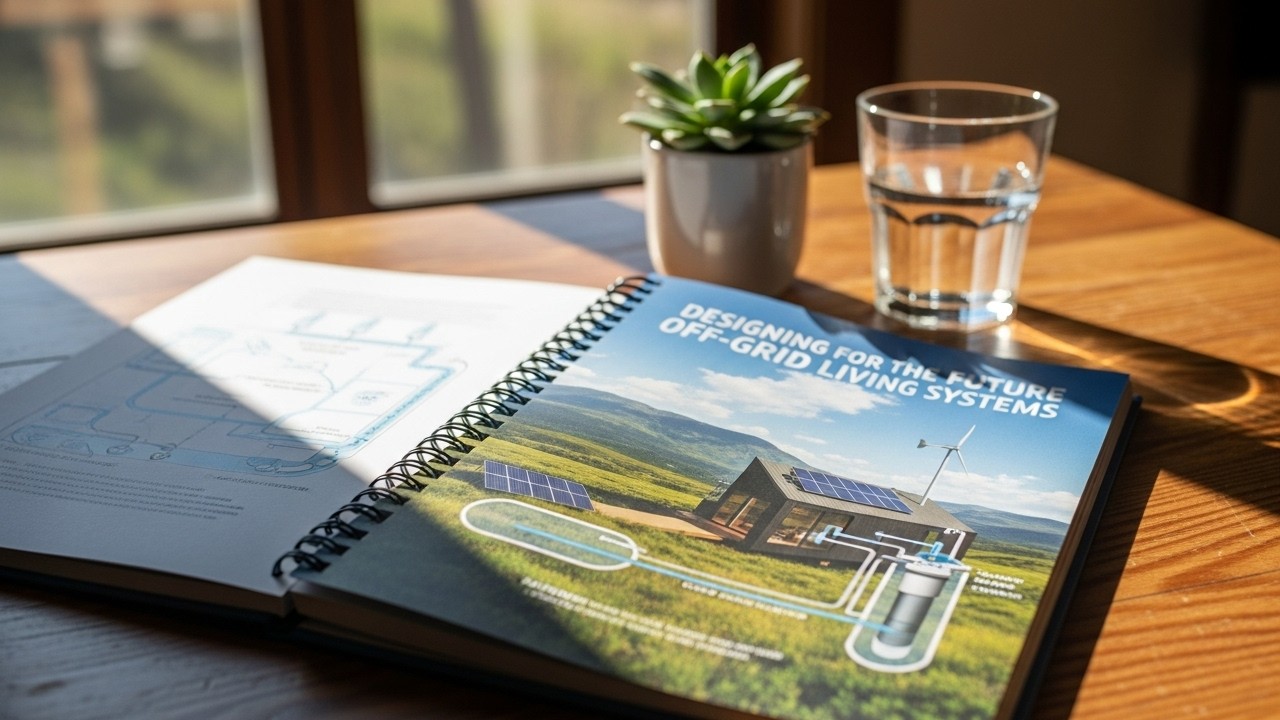
In a world where sustainability and self-reliance are more than buzzwords, off-grid living is emerging as a powerful architectural and lifestyle paradigm. Far from merely being a remote cabin in the woods, off-grid design embodies a thoughtful integration of systems that support comfort, resilience, and independence.
What Does ‘Off-Grid’ Really Mean

Off-grid living refers to structures that operate independently of conventional public utilities — including electricity, water supply, and sewer systems. Instead, these buildings rely on self-managed systems tailored to local climate, geography, and user needs. What this approach demands most is intentional design — systems that are reliable, maintainable, and harmonious with human comfort and environmental responsibility.
The Four Pillars of Off-Grid Systems
Designing a successful off-grid project requires careful consideration of four essential systems:
1. Reliable Power

At the core of off-grid architecture is a dependable energy strategy. Renewable energy, particularly solar, remains one of the most practical solutions due to its scalability and low operational maintenance. Hybrid systems that combine renewable sources with battery storage and backup power ensure resilience across seasons. Designing for realistic energy usage — rather than peak demand — helps create stable, stress-free living environments.
2. Effective Thermal Comfort

Thermal comfort in off-grid buildings is achieved through design, not dependency. Insulation quality, building orientation, thermal mass, passive solar gain, and controlled ventilation play a far greater role than mechanical systems alone. A well-designed envelope reduces energy demand while ensuring year-round comfort, especially in extreme climates.
3. Water Autonomy

Water independence extends beyond sourcing — it includes harvesting, storage, filtration, and reuse. Rainwater collection systems, underground or overhead storage, and layered filtration enable buildings to meet both potable and non-potable needs. Designing redundancy into water systems safeguards against seasonal shortages and long-term climate variability.
4. Waste and Sanitation

Modern off-grid sanitation systems reimagine waste as a resource. Composting toilets, greywater recycling, and on-site treatment systems reduce environmental impact while maintaining hygiene and comfort. When thoughtfully integrated, these systems operate seamlessly and support sustainable water cycles within the site itself.
Common Challenges and Design Mistakes
Off-grid systems demand precision. Common design mistakes include treating off-grid solutions as temporary setups, underestimating seasonal performance shifts, and over-engineering systems with unnecessary automation. The most successful off-grid projects prioritize durability, simplicity, and ease of maintenance — systems occupants can understand, operate, and sustain long-term.
Beyond Infrastructure: A Design Philosophy
Off-grid architecture is not just a technical choice — it reflects a deeper philosophy of self-sufficiency, resilience, and contextual design. These projects encourage architects to rethink the relationship between buildings and their environment, creating spaces that work with natural systems rather than against them.
Key Takeaways for Architects
- Integrate systems early: Power, water, waste, and thermal comfort must be designed together, not in isolation.
- Prioritize reliability over complexity: Proven, simple systems outperform complicated solutions over time.
- Design for climate and seasonality: Local environmental conditions should guide every design decision.
- Empower occupants: Accessible systems and intuitive operation ensure long-term sustainability.
Off-grid living systems present architects with an opportunity to redefine sustainable design — not as compromise, but as intentional, resilient, and future-ready architecture. As the demand for self-sufficient and climate-responsive buildings grows, architects have a vital role to play in shaping environments that are independent, responsible, and deeply connected to their context.