Sustainable urban design reveals a city’s priorities not only through its buildings, but through the public spaces it creates for people.
A public space may look beautiful in photographs. It may feature carefully designed landscapes, elegant paving, contemporary furniture, and striking architecture. But a more important question remains:
Who is this space really designed for?
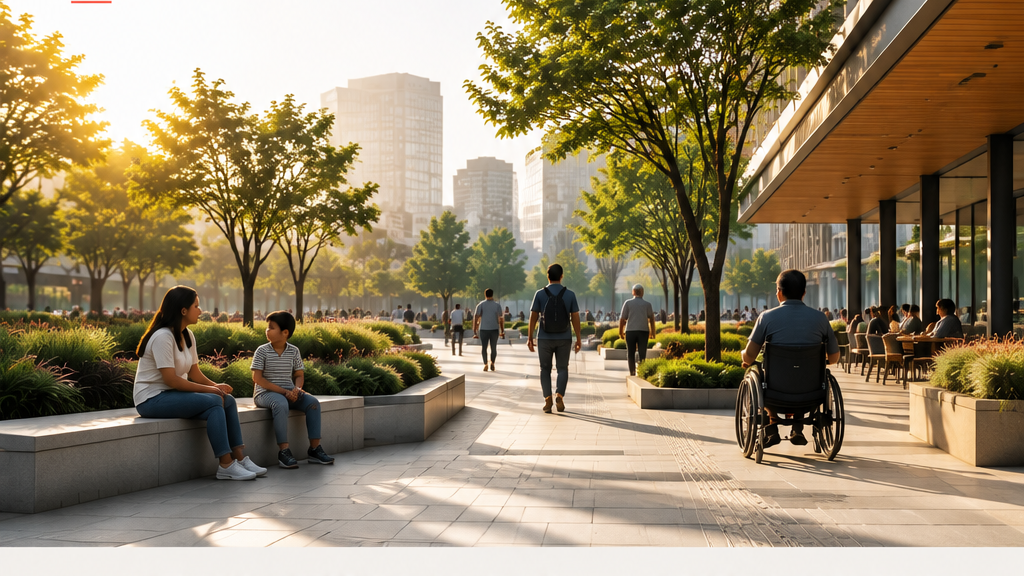
Can a child explore safely? Can an older person find a shaded place to rest? Can a wheelchair user move independently? Can people pause, interact, and feel that they belong?
These are not secondary considerations. They are fundamental questions of urban design.
Beyond Appearance: Designing for Everyday Life
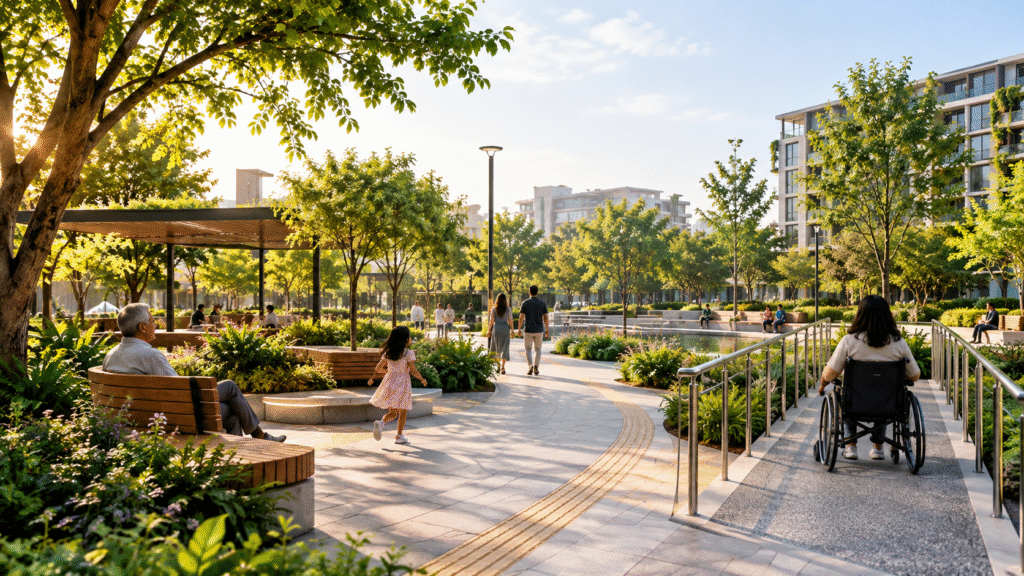
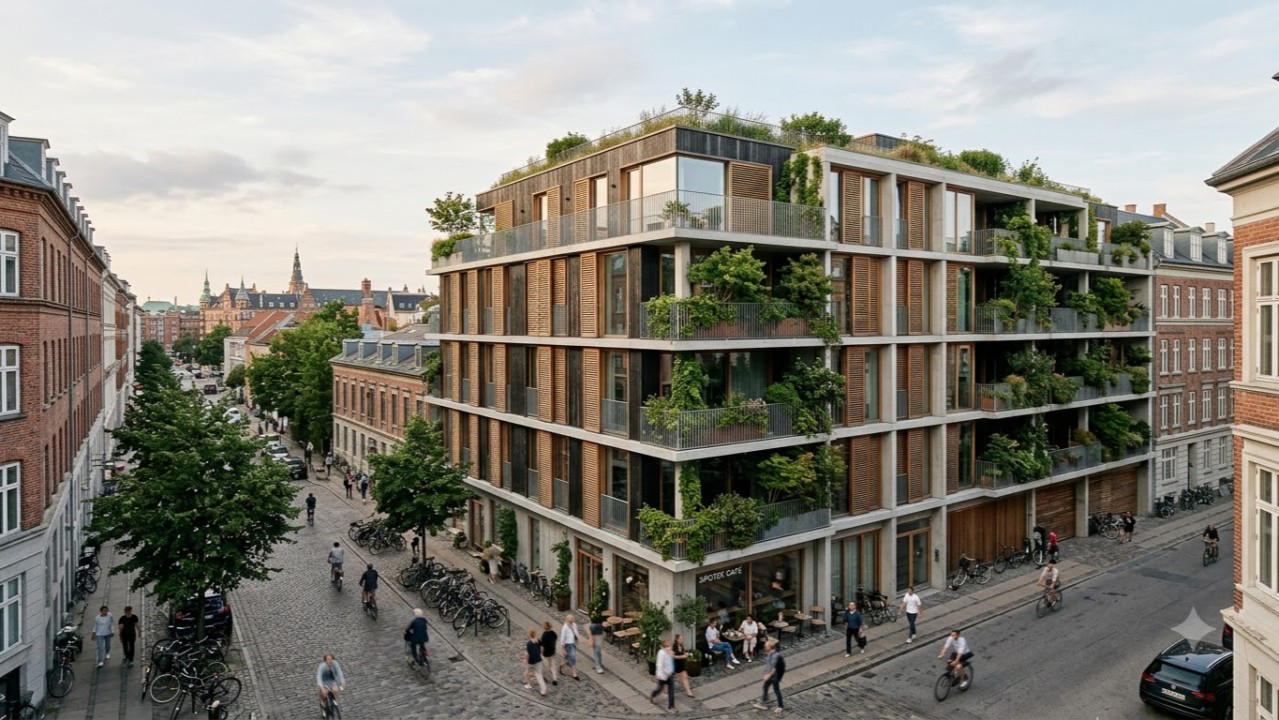
Public spaces are among the most shared environments in a city. Parks, plazas, footpaths, waterfronts, and neighbourhood streets influence how people move, interact, and experience their surroundings every day.
Yet, the success of these spaces is often judged by their visual appeal rather than their everyday usability.
A well-designed public space must consider more than its appearance. It should respond to human needs, different abilities, changing weather conditions, and the varied rhythms of urban life.
Because a space that looks inviting but feels uncomfortable, inaccessible, or unsafe has not fully realised its potential.
Inclusion Is in the Details
Inclusive urban design does not always require grand gestures. Often, it begins with simple, deliberate decisions.
- Accessibility: Continuous, step-free routes and thoughtfully designed crossings that support independent movement.
- Comfort: Adequate shade, seating, lighting, and protection from harsh weather.
- Safety: Clear sightlines, legible circulation, and environments that encourage people to feel secure.
- Belonging: Spaces that accommodate different ages, abilities, backgrounds, and everyday activities.
- Connection: Places that make it natural for people to meet, pause, interact, and participate in community life.
Individually, these decisions may appear small. Together, they can fundamentally influence how a public space is experienced.
From Designing Spaces to Enabling Experiences
A bench is not merely a piece of street furniture. It can make a long walk manageable for an older person.
A shaded pathway is not simply a landscape feature. It can make walking more comfortable in a hot climate.
A step-free entrance is not just a technical provision. It can determine whether someone can access a space independently.
This is where urban design moves beyond physical form and begins to influence the quality of everyday life.
The objective is not simply to create spaces that accommodate people, but to create environments where different people can participate with dignity and confidence.
What Makes a City Truly Liveable?
The quality of a city cannot be understood through its skyline alone. It must also be experienced at street level—in the ease of a daily walk, the comfort of a public gathering, the safety of a crossing, and the opportunity to spend time outdoors.
This calls for a broader understanding of successful urban design: one that connects aesthetics with accessibility, environmental responsiveness, safety, and human experience.
For architects, developers, and urban planners, the responsibility extends beyond creating visually compelling places. It involves asking better questions at the beginning of every project and considering the people who will experience its outcomes long after construction is complete.
Because the measure of a public space is not only what it looks like when finished, but how well it serves the people who use it.
Perhaps the most important question we can ask when designing a public space is not, “How will it look?” but, “Who will feel welcome here?”
At Aesthetic Designs, we believe that thoughtful design begins with looking beyond form to understand the people, context, and experiences that give spaces their meaning.
Design Beyond Aesthetics.
#AestheticDesigns #AestheticGroup #UrbanDesign #PublicSpaces #InclusiveDesign #SustainableArchitecture #UrbanPlanning